Walk into any modern kitchen, and you will likely see the same tools that have been used for decades: a heavy wooden butcher block or a stack of colorful plastic sheets. While these tools are staples, they harbor invisible flaws that modern science is finally shedding light on.
The Plastic Problem: Recent studies have shocked the culinary world with the revelation that the average person ingests approximately a credit card’s worth of microplastics every week. A significant portion of this comes from our kitchenware. Every time you slice a tomato on a plastic board, you aren’t just cutting the vegetable; you are shaving off microscopic particles of polyethylene that end up in your salad—and eventually, in your bloodstream.
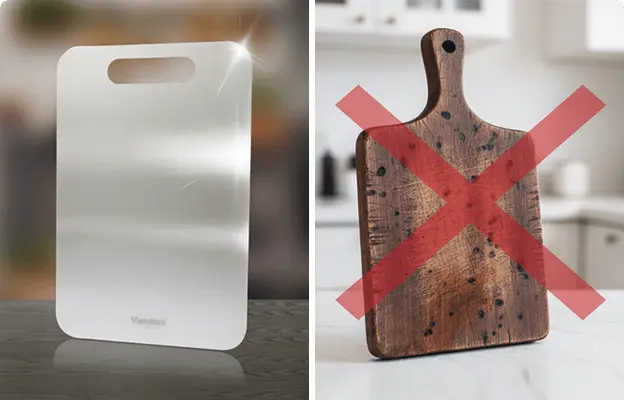
The Bacterial Trap: Wood and bamboo, while natural, are porous. Even with diligent oiling, deep knife scars become sanctuaries for Salmonella, E. coli, and mold. No amount of scrubbing can reach the bacteria living inside the grain of an old wooden board.
In 2025, a solution emerged that promised to eliminate both these threats: Titanium.
Leading this charge is Vanotium, a brand that has taken social media by storm. Marketing itself as the creator of the “Last Cutting Board You Will Ever Buy,” Vanotium claims to offer a surface that is indestructible, antibacterial, and completely free of microplastics. But is it a revolutionary kitchen upgrade, or just a piece of expensive metal?
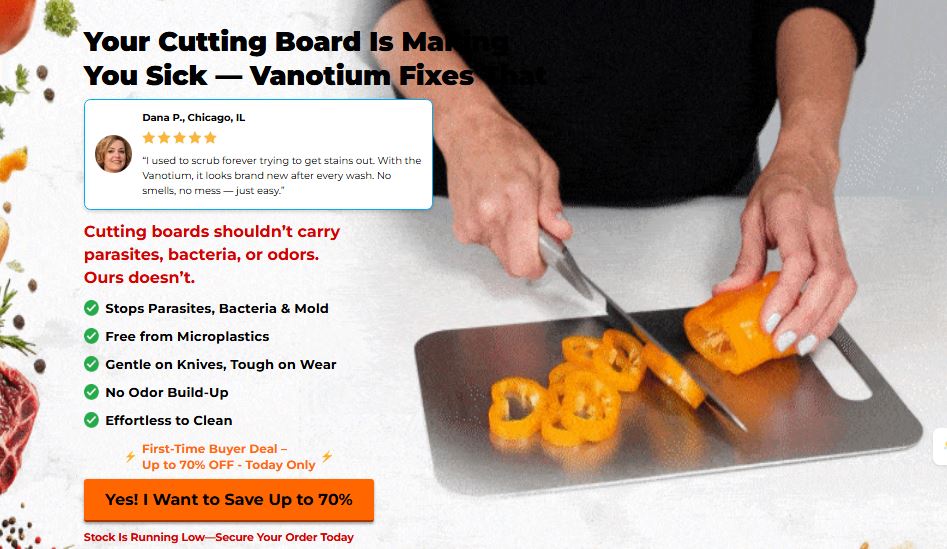

What is the Vanotium Cutting Board?
Vanotium is a premium cutting board that uses an advanced titanium‑based surface to create a sealed, non‑porous barrier against liquids, food particles, and bacteria. Unlike boards that absorb meat juices or develop deep grooves, its titanium layer repels stains and odors, so the surface looks almost new after each wash.
The board is positioned as an “always clean, always safe” solution for both home cooks and professional chefs who want a hygienic, low‑maintenance prep surface without microplastics, warping, or chemical coatings. It is marketed as the last cutting board you will ever need, with a lifespan measured in years of heavy daily use.
Key Features and Benefits of Vanotium Chopping Board:
Vanotium centers its value around hygiene, durability, and ease of use, which are crucial for searches like “best antibacterial cutting board” and “titanium cutting board safe or not.”
-
Advanced titanium surface that naturally resists bacteria, mold, and parasites, reducing the risk of foodborne illness from raw meat or seafood.
-
Non‑porous, odor‑resistant design that does not trap garlic, fish, or meat smells, and does not absorb juices or stains like wood or plastic.
-
Scratch‑proof and stain‑resistant surface that avoids deep knife grooves where microbes can hide, keeping the board visually clean and structurally sound.
-
Knife‑friendly density tuned to protect blades while still standing up to daily chopping, so knives stay sharper longer than on glass or very hard boards.
-
Heat‑resistant, waterproof, and fast‑drying, so it will not warp, swell, split, or melt, even with hot foods and frequent washing.
-
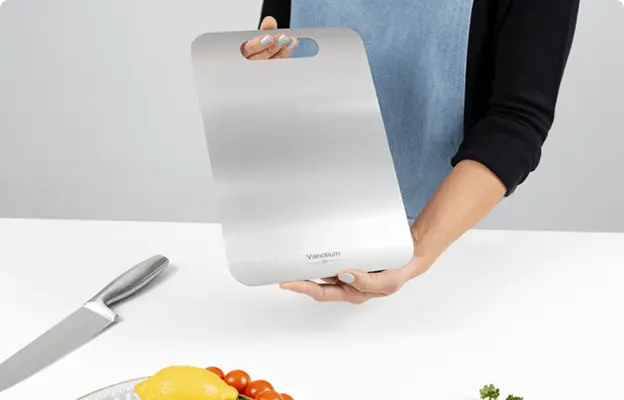
Lightweight yet durable construction with stability features such as rubberized edges or grip points on some versions to prevent slipping.
-
Fully dishwasher‑safe and quick to rinse clean, so maintenance is as simple as regular washing without oiling or special treatment.
These benefits make Vanotium highly attractive for voice searches like “cutting board that doesn’t smell,” “board that won’t warp,” or “non‑toxic cutting board with no microplastics.”
Hygiene, Food Safety, and Microbe Protection
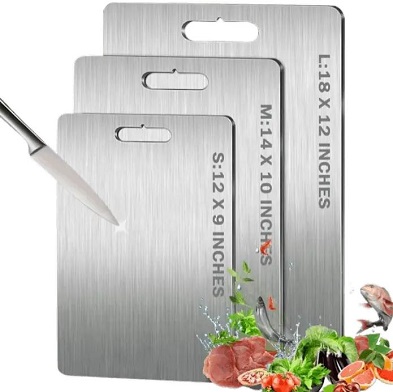

Third‑party reviews emphasize that this structure makes cleaning much easier and significantly reduces the risk of cross‑contamination between different ingredients. Because the board is free from microplastics and BPA, it avoids the shedding and chemical concerns increasingly associated with plastic cutting boards. For health‑conscious families or anyone who has dealt with smelly, stained boards, this hygiene profile is a major upgrade.
Knife‑Friendliness and Everyday Cutting Performance
One of the big questions around metallic boards is whether they destroy knife edges, and Vanotium addresses this directly. The brand claims its titanium surface is engineered with a balanced hardness: strong enough to resist dents and scratches, yet not so hard that it chips or rapidly dulls blades when used with proper cutting technique.
Customer testimonials on product pages describe the board as gentle on knives and note that blades stay sharper longer compared to glass or hard plastic boards, especially when doing normal push‑cuts and avoiding abusive techniques. Some general titanium‑board tests online do highlight that metallic boards can feel slick or loud, and that edge wear depends on technique, so Vanotium owners may still want to use a quality chef’s knife and maintain moderate force for best results.
Durability, Heat Resistance, and Longevity
Vanotium is built for long‑term use, with claims of being scratch‑resistant, warp‑proof, and tough enough for daily chopping, carving, and meal prep. Industrial and lab testing referenced in review write‑ups suggests that titanium coatings maintain their surface integrity after thousands of cutting cycles, whereas plastic or soft composite boards often develop grooves or structural fatigue in far fewer sessions.
The titanium layer and waterproof base allow the board to withstand exposure to moisture and high temperatures without swelling, cracking, or warping. Users report that it stays flat and visually clean even after months of heavy home use, making the higher upfront price easier to justify over time compared to frequently replacing cheaper boards.
Ease of Cleaning and Daily Maintenance
For queries like “cutting board that’s easy to clean” or “dishwasher‑safe titanium cutting board,” Vanotium focuses on convenience. Its non‑porous surface releases food quickly, so most residues rinse away with a quick wash under warm water and mild soap, and it is fully safe to run through a dishwasher cycle.
Because the board dries very quickly and does not need mineral oil, bleach, or special disinfectants, clean‑up is faster than with wood, and there is less risk of hidden moisture causing mold growth. Owner feedback often mentions that the board looks nearly brand new after each wash, even after cutting strong‑smelling foods like garlic, onions, or fish.

Real‑World Reviews, Ratings, and Complaints
Vanotium has attracted thousands of buyers and a strong average rating, with many reviewers saying they would recommend it to friends and family. Verified customers praise its resistance to stains and smells, its knife‑friendliness, and the peace of mind they feel knowing the board does not harbor bacteria like their previous wood or plastic boards.
However, more detailed 2025 review round‑ups also surface a few recurring complaints and trade‑offs. Some shoppers initially misunderstand the material, assuming the board is solid titanium rather than a titanium‑coated food‑safe composite, which leads to mismatched expectations until they read the official description. A small number of users note that the surface can feel slick, especially when cutting very wet foods, but this is often mitigated by using a non‑slip mat or towel underneath. Others mention that customer service response times can lengthen during big promotional pushes, although the 30‑day money‑back guarantee and willingness to issue refunds or replacements are viewed positively overall.
Vanotium vs Wood, Plastic, and Other Cutting Boards
For search terms like “Vanotium vs plastic cutting board” or “titanium vs wood board pros and cons,” the differences are clear in several categories.
| Aspect | Vanotium Cutting Board | Typical Wood/Bamboo Board | Common Plastic Board | Glass/Stone Board |
|---|---|---|---|---|
| Surface type | Titanium‑based, non‑porous | Porous fibers that absorb liquids | Soft plastic that scratches easily | Very hard, non‑porous |
| Hygiene | High: blocks bacteria, mold, parasites | Moderate: can trap microbes in pores | Low: deep grooves harbor bacteria | High surface hygiene, but hard on knives |
| Odor/stain resistance | Excellent; odors and stains rinse away | Prone to smells and discoloration | Often stains and holds odors | Good, but may show marks |
| Knife impact | Knife‑friendly density with proper technique | Fair; gradually dulls edges | Can dull blades form grooves | Very harsh; dulls or chips knives |
| Durability/warping | Scratch‑proof, warp‑proof in normal use | Can warp, crack, or split over time | Warps, stains, and need frequent replacing | Can chip or shatter if dropped |
| Cleaning | Dishwasher‑safe, quick‑drying | Usually hand‑wash only | Often dishwasher‑safe but retains cuts | Hand‑wash; awkward to handle |
| Health concerns | No microplastics or BPA | Requires careful sanitizing | Microplastic shedding and chemical worries | Safe surface, but knife damage risk |
| Long‑term cost | Higher purchase price, long lifespan | Lower cost but more frequent replacements | Low price, replaced often | Medium price, not knife‑friendly |
This comparison supports Vanotium’s positioning as a premium but practical choice for cooks prioritizing hygiene, durability, and knife care.


Pricing, Discounts, and Where to Buy Safely?
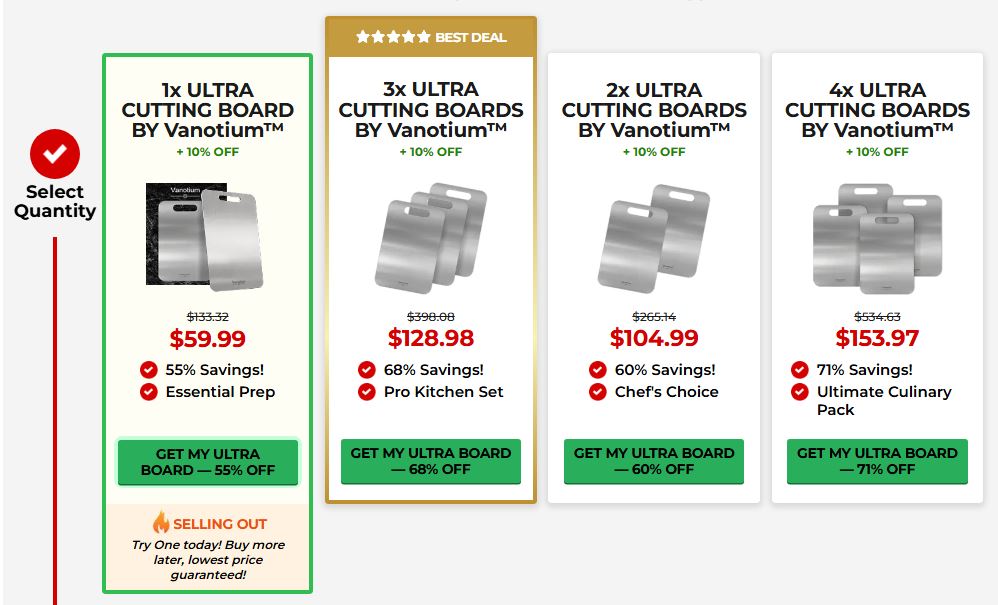
Vanotium is sold primarily through its official site, which frequently advertises first‑time buyer promotions of up to 70% off, plus fast, trackable shipping within 5–7 days and a 30‑day risk‑free guarantee. While exact pricing can vary by promotion and bundle, the base cost sits above typical plastic or entry‑level wooden boards, reflecting its advanced materials and positioning as a long‑lasting upgrade.
Review analyses recommend purchasing only from official channels to avoid look‑alike products that might not use the same titanium surface, hygiene standards, or warranty. For affiliate content, clear calls to action such as “Order Vanotium from the official website for today’s up‑to‑70%‑off deal and 30‑day guarantee”.
Pros and Cons (Buyer’s Snapshot)
To help answer “Is Vanotium worth it?” in a snippet‑friendly way, these are the main advantages and trade‑offs.
Pros
-
Titanium‑based, non‑porous surface that strongly resists bacteria, mold, parasites, stains, and odors.
-
Knife‑friendly density that preserves sharpness better than glass or stone while still resisting scratches.
-
Warp‑proof, heat‑resistant, waterproof construction built for heavy daily use over many years.
-
Effortless cleaning: dishwasher‑safe, quick‑drying, no oils or special sanitizers required.
-
No microplastics, BPA, or toxic coatings, making it appealing for health‑focused households.
-
Strong buyer satisfaction, high ratings, and a clear 30‑day money‑back guarantee.
Cons
-
Higher upfront cost compared to standard plastic or entry‑level wood boards, even when discounts apply.
-
Some users initially misunderstand that it is titanium‑surfaced rather than solid titanium.
-
A few buyers notice slickness when cutting wet foods and may prefer using a non‑slip mat underneath.
-
Customer service response times can stretch during heavy promotion periods, though issues typically resolve under the guarantee.
Who Vanotium Chopping Board is Best For?
Vanotium is most suitable for cooks who value hygiene, long‑term durability, and knife care more than the lowest possible price. Health‑conscious families preparing raw meats frequently can benefit from the non‑porous, antibacterial surface that lowers the risk of cross‑contamination. Professional chefs or serious home cooks who rely on sharp blades will appreciate the balance between scratch resistance and edge protection, especially compared to glass or stone boards.
It is also a strong option for people tired of scrubbing stains and dealing with lingering smells, since user stories repeatedly highlight how the board rinses clean without retaining odors. For those upgrading from multiple cheap boards to a single long‑term solution, Vanotium’s lifetime‑style positioning and guarantee provide added reassurance.
How to Use and Care for a Vanotium Cutting Board?
Using Vanotium is very similar to using any other cutting board, but a few best practices help maximize longevity and performance.
-
Rinse the board with warm, soapy water before the first use to remove any factory residues.
-
Place it on a stable, dry surface; add a non‑slip mat or towel underneath if your counters are slick.
-
Use it for meats, seafood, vegetables, fruits, and everyday prep, taking advantage of its scratch‑resistant surface and odor resistance.
-
Wash the board after each use with mild detergent or place it in the dishwasher; avoid harsh abrasives that could mar the finish.
-
Allow it to dry fully—usually very quickly thanks to the non‑porous titanium layer—before storing upright or flat.
Manufacturers also recommend avoiding direct flame or placing the board under broilers, and being cautious about extreme thermal shock from very hot pans directly from the oven.

Briefed FAQs About the Vanotium Cutting Board
Q. What makes the Vanotium Cutting Board different from other boards?
Vanotium uses an advanced titanium‑based, non‑porous surface that blocks liquids, bacteria, mold, parasites, and odors instead of absorbing them like wood or scratching and harboring microbes like plastic.
Q. Is the Vanotium board really antibacterial?
The titanium surface creates a sealed, non‑porous barrier that makes it difficult for bacteria and other microbes to penetrate or survive, helping reduce cross‑contamination from raw meats and other high‑risk foods.
Q. Will Vanotium damage my knives?
The board is engineered with a knife‑friendly surface density, so with proper cutting technique, it protects knife edges better than glass or stone while still resisting deep grooves, and many users report improved knife longevity compared to their old boards.
Q. Can I use Vanotium for both raw meat and vegetables?
Yes, the scratch‑proof, stain‑resistant, and non‑porous surface is suitable for meats, seafood, fruits, and vegetables because it does not absorb juices or odors and is easy to sanitize between tasks.
Q. Is the Vanotium Cutting Board dishwasher‑safe?
Vanotium is fully dishwasher‑safe, waterproof, and fast‑drying, so it will not warp, swell, split, or crack from regular machine washing.
Q. Does the Vanotium board contain microplastics or BPA?
The product is marketed as free from microplastics, BPA, and other harmful chemicals, focusing instead on a titanium‑based hygienic surface and food‑safe core.
Q. What if I am not satisfied with my purchase?
Vanotium offers a 30‑day risk‑free guarantee, allowing buyers to try the board at home and request a refund if they are not satisfied within that period.
Q. Where is the safest place to buy the Vanotium Cutting Board?
To avoid imitations and ensure access to the official warranty and guarantee, reviewers recommend purchasing directly from the official Vanotium website or authorized sales pages linked from it.
Final Verdict: The Future of Meal Prep?
The Vanotium Cutting Board is more than just a trend; it is a response to a growing awareness of health and hygiene in the home.
If you are a parent worried about microplastics, Vanotium is a non-negotiable upgrade. The peace of mind knowing that no synthetic particles are entering your child’s food is worth the price alone.
If you are a busy professional who hates hand-washing wooden boards, the dishwasher-safe nature of Vanotium is a game-changer.
Who should skip it? The purist chef. If you own a $400 carbon steel Gyuto and enjoy the ritual of oiling your wooden board, stick with wood.
For everyone else—the 99% of home cooks who want a clean, safe, and indestructible surface—Vanotium is the smart buy for 2025.

