
Introduction: When a Smart Scale Becomes a Health Station
Smart scales have come a long way from the simple bathroom devices that just display your weight. Over the past decade, the best models have evolved to measure body composition metrics — body fat percentage, muscle mass, bone density, hydration levels, and even biological age. But the Withings Body Scan has done something that no other consumer-grade smart scale has managed to do before: it has stepped far beyond body composition and turned a bathroom floor device into a comprehensive home health monitoring station.
At $499.95, the Withings Body Scan is one of the most expensive smart scales ever released for the consumer market. But the question isn’t just whether it is expensive — the question is whether the price makes sense for what you actually get. And the answer, as you’ll discover in this in-depth review, is nuanced. It depends entirely on what you’re looking for, what health conditions you may be managing, and how seriously you take long-term wellness monitoring.
This review draws on hands-on testing data, scientific literature on the technologies the Withings Body Scan uses, and a thorough analysis of what this device offers compared to its competitors. By the end, you’ll know exactly whether the Withings Body Scan belongs in your home.
What Is the Withings Body Scan?
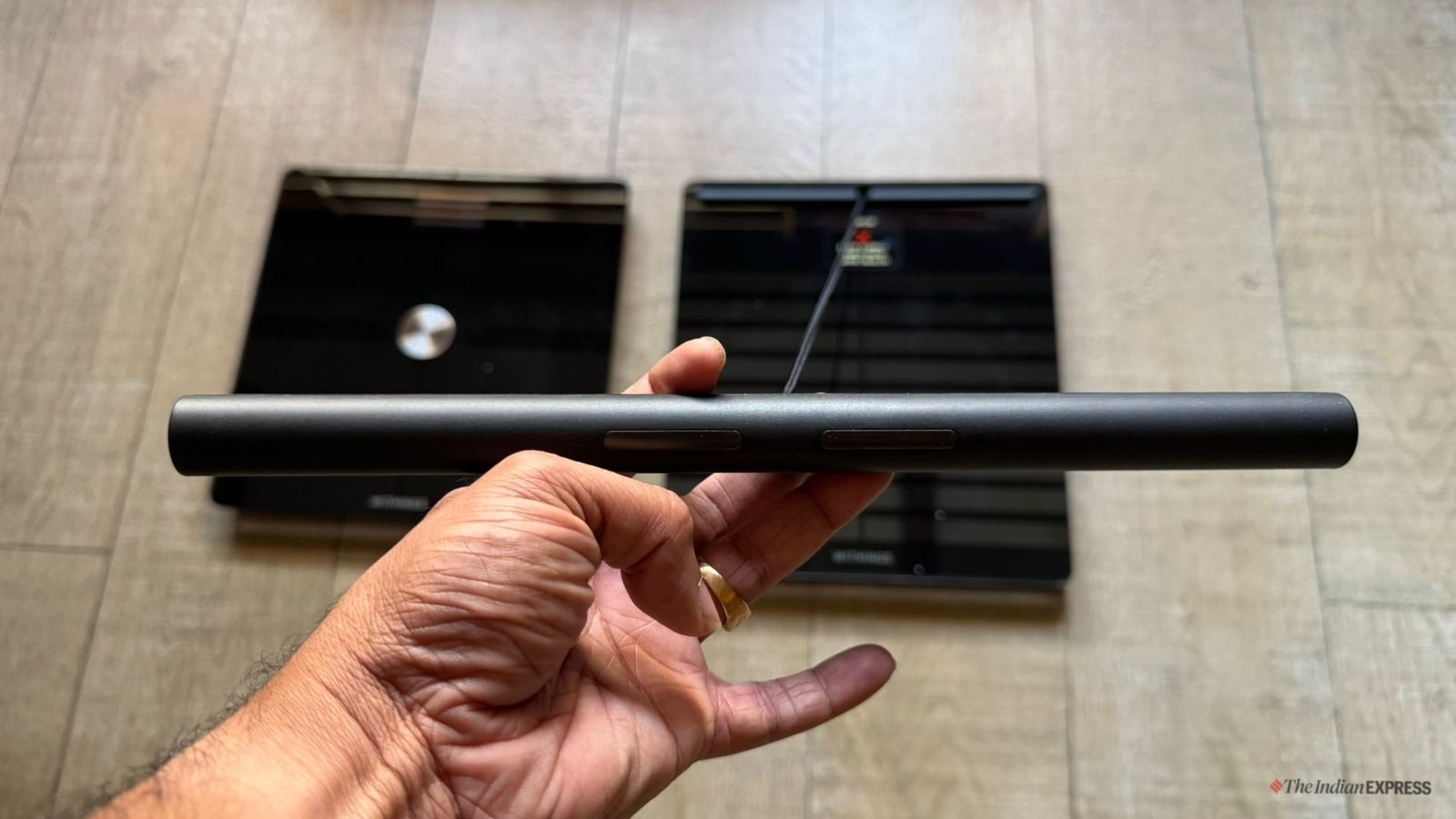
The Withings Body Scan is a Wi-Fi-connected foot-to-hand smart scale — often described as a “connected health station” — designed by French health technology company Withings. Unlike most smart scales that only have sensors in the platform, the Withings Body Scan includes a retractable handle fitted with additional electrodes, allowing it to measure electrical signals from both your feet and your hands simultaneously.
This foot-to-hand design enables the device to do something extraordinary: it can measure not just body composition, but also your heart’s electrical activity (ECG), the stiffness of your arteries, and the health of the small peripheral nerves in your feet. In practical terms, this means that each time you step on the scale and grip the handle, you’re receiving health data typically associated with clinical-grade monitoring tools — all from the comfort of your own bathroom.
The Withings Body Scan is not positioned as a fitness-first product. It’s designed primarily for people who want to monitor their metabolic and cardiovascular health over the long term — particularly those managing conditions like type 2 diabetes, hypertension, or metabolic syndrome.
Key Specifications at a Glance
Before diving into the details, here’s a quick overview of what the Withings Body Scan offers:
Price: $499.95
Dimensions: 12.8 x 12.8 x 1.1 inches (32.5 x 32.5 x 25.6 cm)
Display: 2.8-inch LCD, 320 x 240 pixels
Weight of device: 9.7 lbs (4.4 kg)
Connectivity: Wi-Fi
Maximum user weight: 440 lbs (220 kg)
Maximum user profiles: 8
Battery: USB rechargeable lithium battery (up to 1 year per charge)
Modes: Standard, Baby, Athlete, Pregnancy, Eyes-closed
Companion app: Withings Health Mate
Compatible apps: Apple Health, Google Health, Samsung Health, MyFitnessPal, Strava, Runkeeper, Whoop
Warranty: 2 years
How Does the Withings Body Scan Work? The Science Explained
To understand the value of the Withings Body Scan, you first need to understand the four technologies it uses to collect data. Each one is grounded in clinical science, though all four are adapted for at-home, non-invasive use.
1. Bioelectrical Impedance Analysis (BIA)
Bioelectrical Impedance Analysis, or BIA, is the cornerstone technology in virtually every smart scale on the market. It works by sending a low-voltage electrical current through your body and measuring how much resistance — or impedance — different tissues put up against that current.
Tissues that contain a lot of water, such as muscle, allow the current to flow relatively freely. Tissues with low water content, such as body fat and bone, slow it down or block it entirely. The scale then applies complex algorithms to translate these resistance values into body composition metrics, including body fat percentage, muscle mass, bone mass, and body water percentage.
The Withings Body Scan uses a multi-frequency, foot-to-hand BIA system, which is more sophisticated than the single-frequency, foot-only systems found in basic smart scales. By sending currents through the body in multiple directions and at multiple frequencies, it can produce what is called segmental body analysis — separately measuring the tissue composition of your torso, arms, and legs. This gives a far more detailed picture of your body composition than a standard scale.
That said, it’s important to know the limitations. BIA is not as accurate as the clinical gold standard for body composition measurement — Dual Energy X-ray Absorptiometry (DEXA scanning). BIA readings are influenced by hydration levels, skin temperature, recent exercise, and food intake, which means daily fluctuations are normal and expected. Smart scales that use BIA, including the Withings Body Scan, are best used to identify long-term trends rather than to take definitive, one-off readings.
2. Pulse Wave Velocity Measurement (Arterial Stiffness)
This is where the Withings Body Scan begins to distinguish itself from every other smart scale on the market. It uses two complementary technologies — impedance plethysmography and ballistocardiography — to measure what is known as pulse wave velocity (PWV), which is an established clinical indicator of arterial stiffness.
When your heart beats, it generates a pressure wave that travels through your arteries. The speed at which that wave travels — the pulse wave velocity — reflects how stiff or flexible your arteries are. Stiffer arteries mean faster pulse wave velocity, which is associated with higher cardiovascular risk, including an increased likelihood of developing hypertension, coronary artery disease, and stroke. Research published in the journal Reviews in Cardiovascular Medicine confirms that pulse wave velocity is a reliable independent predictor of cardiovascular outcomes.
In a clinical setting, pulse wave velocity is measured using applanation tonometry, typically with the patient lying down and pressure sensors placed at multiple arterial sites on the neck and groin. The Withings Body Scan adapts this measurement for everyday home use — it records the timing between when blood is ejected from your heart and when it reaches your feet, comparing those measurements between each weigh-in over time.
This technology does not replace clinical arterial stiffness testing, but it provides consistent, directional data that can flag trends worth discussing with a physician. For people at elevated cardiovascular risk, this kind of at-home monitoring could serve as a genuinely useful early warning system.
3. ECG (Electrocardiogram)
The Withings Body Scan can record a single-lead ECG. An ECG measures the electrical signals that regulate your heartbeat, and it can detect irregularities in heart rhythm — most notably atrial fibrillation (AFib), which is one of the most common and potentially serious cardiac arrhythmias. AFib is often asymptomatic and can go undetected for years, making regular monitoring particularly valuable.
When you stand on the scale and grip the handle, the electrodes in both the platform and the handle capture the electrical signals in your heart. The result is displayed in the Withings app as a heart rhythm trace that can be shared directly with a healthcare provider.
It should be noted that the Withings Body Scan’s ECG is a single-lead measurement, which is less detailed than the 12-lead ECG performed in a clinical setting. However, single-lead ECGs have been validated in several studies for detecting atrial fibrillation, and regulators including the US FDA have cleared similar consumer ECG devices. Withings has received regulatory clearance for its ECG functionality in multiple markets.
4. Nerve Health Score (Electrochemical Skin Conductance)
Perhaps the most unique feature of the Withings Body Scan is its Nerve Health Score. This metric is calculated using a technology called Electrochemical Skin Conductance (ESC), which measures how well the sweat glands in your feet conduct a low-voltage electrical current.
The sweat glands in the soles of your feet are densely innervated by very small nerve fibers — known as small fiber nerves or C-fibers — that are among the first to be damaged by conditions like type 2 diabetes, chemotherapy, metabolic syndrome, and certain autoimmune conditions. When these nerves are damaged (a condition called peripheral neuropathy), the sweat glands become less responsive to electrical stimulation.
The Withings Body Scan assigns you a Nerve Health Score from 0 to 100. According to a 2024 review published in Frontiers in Neuroanatomy, a score above 50 indicates normal nerve activity, while values below 50 may signal early-stage neuropathy. In clinical settings, nerve health is diagnosed through nerve biopsy — an invasive surgical procedure. ESC technology represents a promising non-invasive alternative, and studies have shown it can be particularly useful for detecting subclinical neuropathy in people with diabetes.
This feature has profound implications for the Withings Body Scan’s target audience. For someone managing type 2 diabetes, for example, monitoring their Nerve Health Score alongside cardiovascular metrics over time provides a level of health insight that was previously only available through regular clinical appointments.
Withings Body Scan: Design and Build Quality
One of the first things you’ll notice about the Withings Body Scan is that it doesn’t look or feel like a typical smart scale. It has a distinctly premium aesthetic — clean, minimalist, and built to last.
Platform and Handle
The scale’s platform is large and sturdy, constructed from tempered glass with stainless steel electrodes embedded in the surface. The retractable handle — which extends upward when you pull it — is ergonomically shaped and houses additional electrodes in its handgrips. The whole unit has a solid, weighty feel that communicates durability without being excessively bulky.
The maximum user weight capacity is 440 lbs (220 kg), which is notably higher than most competitors, which typically cap out at 396 lbs (180 kg). This inclusion makes the device genuinely more accessible for people with obesity — which is significant given that obesity is closely linked to the very metabolic conditions this scale is designed to help monitor.
Display
The 2.8-inch LCD display, located at the top of the scale unit near the handle base, is small by today’s standards but clear and colorful. It shows your measurements in an organized layout and uses body-positive, non-judgmental language. A particularly thoughtful feature is what Withings calls the Eyes-closed mode — when activated, the scale will not display your body metrics during the weigh-in. Instead, it shows motivational messages or a simple smile emoji. This is a meaningful concession to the reality that constant exposure to daily weight readings can be psychologically harmful for some users, particularly those with eating disorders or body dysmorphia.
Durability and Maintenance
The Withings Body Scan held up well to nearly two months of daily testing, including at least a couple of accidental drops on hard tile flooring, with no visible damage. The glass platform is also relatively resistant to smudging — a practical consideration for a device that barefoot users step onto daily — and a single wipe is typically enough to restore its clean appearance.

Features: What the Withings Body Scan Actually Tracks
Body Composition Metrics
The Withings Body Scan tracks the following body composition metrics with each weigh-in:
- Body weight
- BMI (Body Mass Index)
- Body fat percentage
- Fat-free body mass
- Muscle mass
- Bone mass
- Body water percentage
- BMR (Basal Metabolic Rate) — the number of calories your body needs to sustain basic life functions
- Biological age — how old your body appears to be based on your measurements compared to population averages
The segmental body analysis function provides an additional layer of detail, breaking down muscle and fat composition across three body segments: the torso, arms, and legs. This makes it easier to track whether you’re building muscle in a specific part of your body or losing fat from a particular area.
One notable limitation is that the segmental analysis does not differentiate between the left arm and the right arm, or the left leg and the right leg. For bodybuilders or people recovering from unilateral injuries who need to track muscle asymmetry, this is a meaningful gap.
Cardiovascular and Neural Metrics
In addition to body composition, each full weigh-in with the Withings Body Scan can deliver:
- Heart rate (resting)
- ECG trace (for detecting irregular heart rhythms including AFib)
- Vascular Age — an estimate of how old your arteries appear based on their flexibility
- Nerve Health Score — a 0–100 score reflecting peripheral nerve activity in your feet
Multiple User Modes
The Withings Body Scan supports up to eight different user profiles, and it can automatically recognize each user by their weight — no need to manually log in before each weigh-in. This makes it genuinely practical for multi-person households.
The Baby mode allows a caregiver to weigh a baby or young child by first weighing themselves, then picking up the child and stepping on again — the scale subtracts the difference. Athlete mode adjusts body composition algorithms for users who exercise intensively (athletes tend to have higher water content in their muscles, which can cause standard BIA algorithms to overestimate body fat). Pregnancy mode tracks relevant metrics for expecting mothers. And as mentioned above, Eyes-closed mode suppresses on-screen metrics for those who want to track progress without confronting daily numbers.
App and Ecosystem Integration
All data collected by the Withings Body Scan is synced via Wi-Fi to the Withings Health Mate app. The app can also integrate with Apple Health, Google Health, Samsung Health, MyFitnessPal, Strava, Runkeeper, and Whoop — covering most of the major health and fitness platforms. If you already use other Withings devices, such as the Withings ScanWatch 2 smartwatch, all data consolidates in the app for a unified view of your health.
The app layout, however, was one area that received criticism during testing. It is somewhat cluttered and unintuitive to navigate, particularly for first-time users who want to find specific metrics quickly. Users who prefer a clean, data-forward interface may find it frustrating. Those who prefer trend-based dashboards with lifestyle commentary will likely feel more at home.
Performance: How Accurate Is the Withings Body Scan?
Accuracy is the most important factor when evaluating a smart scale, and the Withings Body Scan performed well relative to its competitors in this category.
Body Composition Accuracy
Testing compared the Withings Body Scan’s readings to those produced by a FitQuest machine — a larger, clinical-grade BIA device typically found in gym and healthcare settings. The results showed close alignment in body weight and only modest discrepancies in body composition:
- Body fat percentage was overestimated by approximately 2%
- Lean muscle mass was overestimated by approximately 3%
- Body water mass was underestimated by approximately 3%
By comparison, two other foot-to-hand smart scales — the RunStar 8E SmartScan Pro and the Renpho Morphoscan Nova — overestimated body fat by approximately 5% and muscle mass by 3%, and underestimated body water by around 4%. The Withings Body Scan’s accuracy margins were therefore meaningfully smaller than those of both competitors.
These discrepancies are within the expected range for consumer BIA devices and should not be cause for alarm. The key is consistency — using the scale under similar conditions (same time of day, similar hydration levels, before eating) will make your trend data far more reliable than any single reading.
Cardiovascular Metric Accuracy
Heart rate readings from the Withings Body Scan were compared with readings from the Withings ScanWatch 2, a validated ECG smartwatch. The two devices showed a difference of only 2 beats per minute in resting heart rate — an impressive level of agreement for a floor-based device.
The Nerve Health Score could not be independently validated during testing due to the absence of a comparable reference tool. The testing reviewer did not have diabetic neuropathy, so the full clinical utility of this metric could not be directly observed.
Connectivity and Battery Performance
The Withings Body Scan connected to Wi-Fi and synced to the app without issues throughout the testing period, with no dropped connections or sync failures. Battery life is rated at up to one year per charge — independent verification over such a long period is beyond the scope of most reviews, but long-term user reports consistently praise the device’s battery longevity.
Who Is the Withings Body Scan For?
This is perhaps the most important question. The Withings Body Scan is a genuinely capable device, but it is not for everyone. Here’s how to think about whether it belongs in your home.
It is an excellent fit for you if:
You are managing a chronic health condition. People living with type 2 diabetes, hypertension, metabolic syndrome, or cardiovascular disease stand to benefit the most from this device. The combination of arterial stiffness monitoring, ECG, and Nerve Health Score gives these users clinical-grade insights at home — data that would otherwise require multiple medical appointments to obtain.
You are health-focused rather than fitness-obsessed. If your goal is long-term health monitoring rather than tracking athletic performance or optimizing a cut phase, the Withings Body Scan aligns well with your needs. It’s designed for people who think about wellness in terms of years and decades, not just weeks.
You already use Withings products. If you own a Withings ScanWatch, Withings blood pressure monitor, or any other Withings device, the Body Scan integrates seamlessly into the ecosystem, giving you a complete picture of your health in one place.
You want inclusive design. The 440-lb weight limit, large platform, long handle, positive language, and Eyes-closed mode make this one of the most thoughtfully inclusive smart scales on the market.
It may not be the right fit if:
You are primarily fitness-focused. Athletes and bodybuilders who want left/right segmental analysis, visceral vs. subcutaneous fat differentiation, and advanced performance metrics may find the Withings Body Scan lacking in the specifics they need.
You are on a budget. At $499.95, this is a significant investment. If your primary goal is simply tracking weight or basic body composition, there are excellent smart scales available for $60–$150 that will serve you adequately.
You want a sleek, data-forward app. If you prefer a no-frills, metrics-heavy app interface, the Withings Health Mate app’s design philosophy may not align with your preferences.
Withings Body Scan vs. Competitors
Withings Body Scan vs. Garmin Index S2
The Garmin Index S2 is priced around $149.99 and offers solid body composition tracking with Garmin Connect integration — ideal for athletes already in the Garmin ecosystem. However, it lacks ECG, arterial stiffness measurement, and Nerve Health Score. For pure fitness tracking, it’s a better value. For health monitoring, the Withings Body Scan is in a different category entirely.
Withings Body Scan vs. Tanita RD-953
The Tanita RD-953 is a high-end smart scale priced around $250 that offers excellent segmental body analysis with left/right differentiation — something the Withings Body Scan does not provide. Tanita devices are popular among athletes and dietitians for this reason. But again, the Withings Body Scan’s cardiovascular and neural monitoring features have no parallel in the Tanita lineup.
Withings Body Scan vs. Renpho Morphoscan Nova
The Renpho Morphoscan Nova costs around $100 and performs solid foot-to-hand BIA measurements. Testing showed it was slightly less accurate than the Withings Body Scan in body composition metrics, and it lacks all three advanced health monitoring features. For users who want basic body composition tracking, the Morphoscan Nova offers good value. For those who want the full health station experience, it simply cannot compete.
Real User Experiences
The Withings Body Scan carries a 4.1-star rating on the Withings website, 4.5 stars at Walmart, and 3.8 stars at Best Buy at the time of the referenced review publication. Users consistently praise the device’s ease of use, premium design, long battery life, and the depth of health data it provides. One user highlighted how the combination of Withings devices — including the Body Scan and the ScanWatch 2 — created a unified, holistic view of their health inside the app that no other ecosystem currently replicates.
The most common criticisms in user reviews focus on body composition consistency. Some users reported noticeable variation between consecutive readings taken in a short time frame, which is a known limitation of all BIA-based scales, not just the Withings Body Scan. Hydration, skin moisture, and even the pressure applied to the footpads can influence readings. Withings recommends taking measurements under consistent conditions — ideally in the morning, before eating or exercising, after using the bathroom.
A smaller number of negative reviews relate to individual hardware faults and customer service experiences — issues that are difficult to assess at scale but worth noting.
Common Questions About the Withings Body Scan
What does the Withings Body Scan measure?
The Withings Body Scan measures body weight, BMI, body fat percentage, muscle mass, bone mass, body water percentage, BMR, biological age, segmental body composition, resting heart rate, ECG, arterial stiffness (expressed as Vascular Age), and Nerve Health Score.
Is the Withings Body Scan accurate?
For a consumer BIA device, yes — it is among the most accurate currently available. Independent testing showed body fat estimation errors of approximately 2–3%, which is smaller than most comparable competitors. However, like all BIA devices, it is best used for tracking trends over time rather than providing definitive one-time measurements.
How does the Withings Body Scan measure nerve health?
It uses Electrochemical Skin Conductance (ESC) to measure how well the sweat glands in your feet conduct a low-voltage electrical current. The small nerve fibers that control these sweat glands are among the first to be damaged by diabetes and other metabolic conditions. The resulting Nerve Health Score (0–100) reflects the activity level of these nerves.
Can the Withings Body Scan detect atrial fibrillation?
Yes. The ECG feature of the Withings Body Scan can flag irregular heart rhythms consistent with atrial fibrillation. The device has received regulatory clearance for this functionality in multiple markets. However, it is not a diagnostic device and should not replace clinical evaluation.
How long does the battery last on the Withings Body Scan?
Withings claims up to one year of battery life per charge. Long-term user reports generally support this claim, with most users finding the battery lasting many months even with daily use.
How many users can the Withings Body Scan support?
Up to eight individual user profiles, with automatic user recognition by weight.
What apps does the Withings Body Scan work with?
The Withings Body Scan syncs with Apple Health, Google Health, Samsung Health, MyFitnessPal, Strava, Runkeeper, and Whoop, as well as any other Withings devices via the Health Mate app.
Who should buy the Withings Body Scan?
It is best suited for people managing cardiovascular conditions, metabolic disorders, or type 2 diabetes, as well as health-conscious individuals who want comprehensive, long-term home health monitoring beyond basic body composition. It is less suited for budget-conscious buyers or pure-performance athletes who need advanced fitness-specific metrics.
Should You Buy the Withings Body Scan?
The Withings Body Scan is, without question, the most advanced smart scale available to consumers in 2026. No other device in this category offers ECG measurement, arterial stiffness monitoring, and peripheral nerve health assessment alongside comprehensive body composition analysis — all in a single bathroom device. For the right user, it delivers genuine health value that goes well beyond what any competitor can provide.
But the right user matters enormously here. If you are managing or monitoring cardiovascular disease, hypertension, type 2 diabetes, or metabolic syndrome, the Withings Body Scan is a compelling investment. It brings a level of home health monitoring that, until recently, would have required multiple clinic visits to replicate. The long battery life, automatic multi-user recognition, premium build quality, and seamless app integration all reinforce the case for buying.
If, however, you are primarily interested in tracking body composition for fitness or weight management goals, or you are looking for athlete-level segmental analysis, the Withings Body Scan’s $499.95 price tag is harder to justify. You’d be paying a large premium for features you’re unlikely to use or interpret meaningfully without a health context that makes them relevant.
The verdict: this is a smart scale for people who take their long-term health seriously — particularly those for whom cardiovascular health and nerve function monitoring are personally meaningful. For that audience, it is not just worth the money — it may be one of the most valuable health devices you own.
Final Verdict
Overall rating: 4/5
The Withings Body Scan earns its premium position through genuinely differentiated technology and thoughtful, inclusive design. It is the best smart scale for health monitoring in 2026, and there is no close second when it comes to cardiovascular and nerve health insights at home. The limitations — a confusing app interface, the absence of left/right segmental differentiation, and a high price — are real but manageable, particularly given the strength of what this device does uniquely well.
If you are investing in your long-term health and you want data-driven insight at home, the Withings Body Scan is the scale to buy.